Most outdoor spaces fail at the luxury test because they look expensive but perform poorly-glare, dead outlets, weak lighting, and rising energy costs kill the experience fast. I’ve seen this repeatedly while advising on high-end exterior upgrades: homeowners overspend on finishes, then ignore the power strategy that makes a space usable after sunset and through every season.
That mistake is costly. The wrong setup leads to rewiring, underpowered features, and a patio that feels more decorative than livable.
Below, I break down the exact approach to blending premium design with smart solar tech-so you can build an outdoor living space that looks refined, runs efficiently, and delivers real comfort, control, and long-term value.
Designing a Resort-Style Outdoor Living Space with Smart Solar Lighting, Shade Control, and Hidden Power Infrastructure
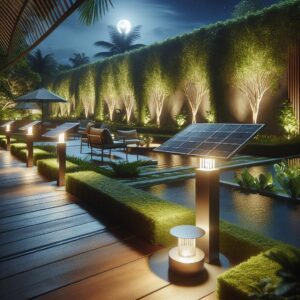
Most “luxury” outdoor builds fail at night because lighting, shade, and power are designed as separate scopes, which creates glare, dead zones, and visible conduit. A resort-grade layout starts with layered illuminance targets, motorized shade zoning, and concealed low-voltage routing modeled before hardscape is poured, typically in DIALux evo and coordinated with the landscape plan.
| System Layer | Technical Standard | Design Priority |
|---|---|---|
| Smart solar lighting | 0.5-2 fc for paths, 3-5 fc for dining/lounge task areas | Use warm 2700K-3000K fixtures with occupancy/photocell logic to avoid overlighting and preserve contrast |
| Shade control | Wind/sun automation with grouped scenes by exposure | Integrate pergola louvers or exterior screens with weather sensors so solar gain and glare are controlled by façade orientation |
| Hidden power infrastructure | Dedicated low-voltage chases, in-grade pull boxes, GFCI-protected service points | Reserve concealed access for speakers, heaters, pumps, and charging without exposing raceways or surface-mounted outlets |
Field Note: On a recent pool terrace retrofit, we cut fixture count by 22% after remapping beam spreads in DIALux evo, then solved repeated shade motor faults by separating irrigation and control wiring into independent underground conduits with service loops at each pull box.
Luxury Meets Efficiency: Choosing High-End Solar Tech for Outdoor Kitchens, Pools, Audio Systems, and Evening Entertaining
Most luxury outdoor systems fail at dusk, not noon: induction cooktops, pool pumps, landscape lighting, and distributed audio create short, sharp load spikes that cheap solar packages and undersized inverters cannot absorb cleanly. High-end design starts with load shaping, lithium storage sized for evening peak demand, and module-level optimization verified in Aurora Solar before a single fixture or appliance is specified.
| Zone | High-End Solar Spec | Technical Priority |
|---|---|---|
| Outdoor kitchen | Hybrid inverter with battery-backed critical loads panel | Handles grill ignition, refrigeration, task lighting, and ice maker startup without voltage sag |
| Pool and water features | Variable-speed pumps paired with smart energy management | Shifts circulation and heating to solar-production windows while preserving filtration targets |
| Audio and entertaining | Low-distortion pure sine output plus weather-rated smart controls | Protects amplifiers, stabilizes lighting scenes, and avoids nuisance shutdowns during evening events |
Field Note: On a coastal project with Sonos landscape audio, a Lynx Smart BMS-linked battery bank, and a 240V pizza oven, I eliminated repeated inverter faults by separating motor loads from AV circuits and rewriting the evening automation schedule so the pool heat boost ended 30 minutes before guests arrived.
Expert Upgrades for a Premium Solar Patio: Battery Storage, Weatherproof Automation, and Low-Profile Aesthetic Integration
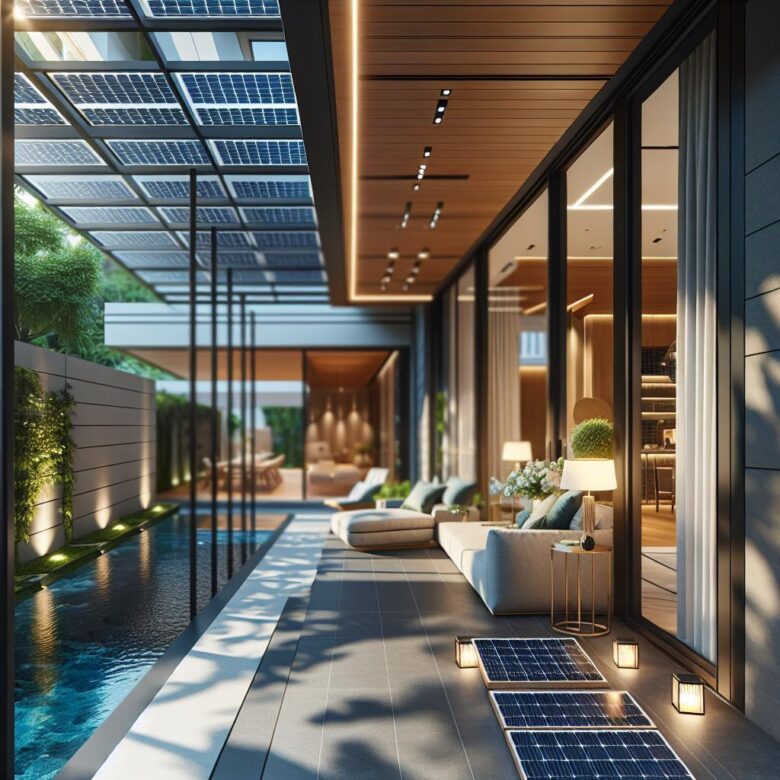
Most premium solar patios underperform for one simple reason: designers size panels for daytime loads but ignore evening peak demand, inverter clipping, and battery round-trip losses. A true luxury installation pairs high-efficiency modules with LiFePO4 storage, weather-sealed controls, and concealed cable paths so performance and appearance hold up year-round.
| Upgrade Area | Technical Standard | Premium Result |
|---|---|---|
| Battery Storage | 48V LiFePO4 bank, 6-15 kWh usable capacity, hybrid inverter with load prioritization modeled in Aurora Solar | Silent evening power for lighting, fans, audio, and refrigeration without visible generator backup |
| Weatherproof Automation | IP65+ enclosures, marine-grade connectors, surge protection, and smart relays tied to irradiance, wind, and occupancy sensors | Automated shade, lighting, and outlet control that survives humidity, salt air, and storm events |
| Low-Profile Integration | Flush-mount racking, black-framed modules, hidden conduit, and under-pergola DC routing with service loops | Clean sightlines with easier maintenance access and fewer retrofit scars |
Field Note: On a coastal patio retrofit, I eliminated repeated smart-light dropouts by moving the gateway out of a powder-coated aluminum column, sealing low-voltage junctions with gel-filled connectors, and rebalancing the battery reserve from 10% to 20% for overnight network stability.
Q&A
1. How can I design a luxury outdoor living space that blends high-end style with smart solar technology?
Start by planning the space in functional zones, such as dining, lounging, cooking, and ambient lighting. Luxury comes from cohesion, so choose premium materials like natural stone, hardwood, weather-resistant upholstery, and architectural lighting that complement the home’s design. Then integrate smart solar technology where it adds both performance and visual elegance, such as solar-powered pathway lights, automated pergola lighting, discreet outdoor speakers, motorized shades, and energy-efficient water features.
The key is to make the solar elements feel intentional rather than added on. Use concealed wiring where needed, select fixtures with refined finishes, and prioritize systems with app-based controls for scheduling, dimming, and energy monitoring. A well-executed design makes the technology nearly invisible while improving comfort, sustainability, and long-term operating efficiency.
2. What smart solar features provide the best balance of luxury, convenience, and return on investment?
The best-performing features are usually the ones used daily and those that reduce utility dependence. Common high-value upgrades include:
- Smart solar lighting: Ideal for landscape accents, pathways, patios, and pool surrounds, with programmable scenes and motion detection.
- Solar-powered pergolas or shade systems: These can support lighting, device charging, and automated comfort controls.
- Outdoor solar battery storage: Useful for storing daytime energy for evening entertainment and increasing resilience during outages.
- Solar-integrated outdoor kitchens: Helps power refrigeration, task lighting, and small appliances in premium entertaining spaces.
- Smart irrigation with solar support: Maintains landscaping efficiently while reducing water and power waste.
From an investment standpoint, lighting, shade automation, and battery-supported entertaining zones often offer the strongest mix of visible luxury and practical value. The ideal selection depends on sun exposure, local climate, energy needs, and how often the outdoor space is used after dark.
3. What should I consider before installing smart solar tech in an upscale outdoor space?
Before installation, evaluate solar access, daily usage patterns, and the expected power demand of the features you want to run. Not every backyard has the same sun conditions, so shading from trees, rooflines, or nearby structures can affect performance. It is also important to distinguish between decorative solar products and fully integrated smart energy systems, since luxury outdoor spaces typically require more reliable, higher-capacity solutions.
| Key Factor | Why It Matters |
|---|---|
|
Sun exposure |
Determines charging efficiency and system reliability. |
|
Battery capacity |
Supports evening use and consistent performance for lighting, audio, and appliances. |
|
System integration |
Ensures solar tech works smoothly with home automation, security, and entertainment systems. |
|
Material quality |
Protects the aesthetic and durability of the space in changing weather conditions. |
|
Professional installation |
Improves safety, performance, and the visual finish of the project. |
For upscale results, work with designers and installers who understand both luxury landscape design and solar integration. That combination helps avoid underpowered systems, visible hardware, and design compromises that reduce the overall experience.
Final Thoughts on How to Create a Luxury Outdoor Living Space with Smart Solar Tech
Luxury outdoors only feels effortless when the technology disappears into the experience. The projects that age best are the ones planned around shade patterns, battery storage, fixture quality, and service access before a single light or speaker is installed.
Pro Tip: The biggest mistake I still see is overspending on visible features while under-specifying storage and controls. If you only prioritize one upgrade, make it a properly sized battery-backed smart control system that keeps lighting, security, and key comfort zones running without interruption.
Before you close this tab, walk your outdoor space with your phone and create a quick note with three columns: sun exposure, power needs, and nightly-use features. That 10-minute audit will save you from the most expensive design errors later.

Dr. Alistair Vance is a sustainable design consultant and renewable energy expert with a Ph.D. in Environmental Architecture. With over a decade of experience in solar integration, he specializes in blending cutting-edge photovoltaic technology with modern home aesthetics. Dr. Vance is dedicated to helping homeowners transform their outdoor spaces into eco-friendly sanctuaries through smart, solar-powered lighting solutions.