Most hardscaping projects fail before the first paver is set: they look sharp, but trap heat, waste runoff, and ignore energy performance. After working on outdoor design plans where one poor material choice raised maintenance costs and undermined solar gains, I’ve seen how expensive “good-looking but inefficient” really becomes.
Patios, walkways, retaining walls, and driveways should do more than define space. They should manage drainage, reduce surface temperatures, support solar lighting, and improve how a property uses and preserves energy.
Below, I break down the essentials for choosing hardscape materials, layout strategies, and solar-ready features that deliver durability, lower operating costs, and better outdoor performance.
Solar-Ready Hardscaping Design: How to Plan Patios, Walkways, and Retaining Walls for Maximum Sun Exposure and Year-Round Efficiency
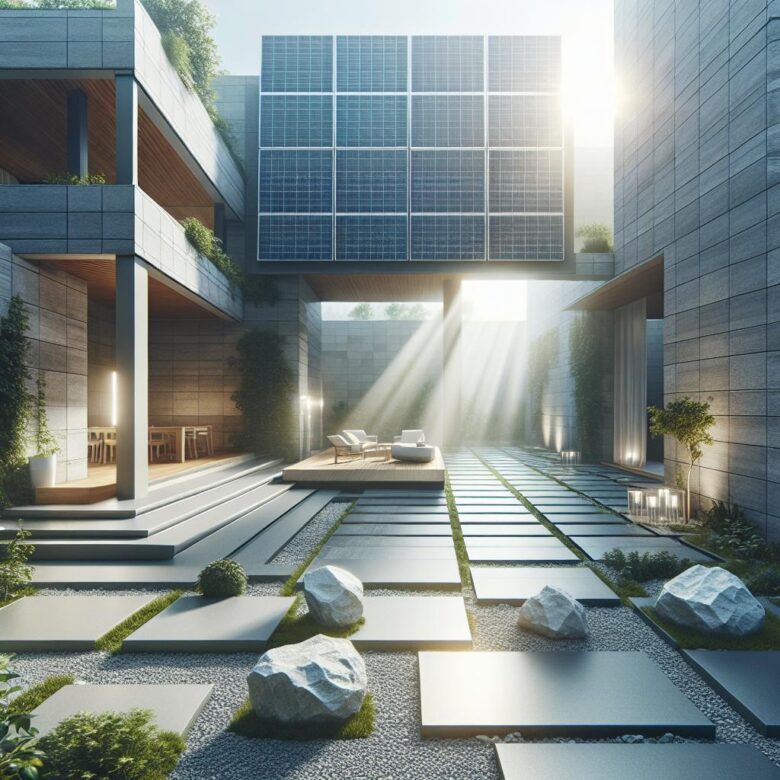
A patio poured without a solar study can cut winter irradiance to nearby panels by 8-15% through low-angle shadowing from seat walls, pergolas, and grade transitions. Solar-ready hardscaping starts with sun-path geometry, drainage slope, and surface reflectance modeled together-typically in Aurora Solar or PVsyst before finalizing layout dimensions.
| Hardscape Element | Solar-Ready Design Requirement | Performance Impact |
|---|---|---|
| Patios | Keep shade-producing features south/west of array zones; use light-colored pavers with moderate SRI | Reduces reflected heat gain while preserving usable winter sun access |
| Walkways | Align circulation routes to avoid future trench conflicts for conduit and battery/service runs | Lowers retrofit demolition cost and shortens installation time |
| Retaining Walls | Limit wall height near south-facing exposures; verify December shadow length against module setback | Prevents seasonal production losses and frost-related drainage failures |
Field Note: On a hillside retrofit, I shifted a retaining wall 36 inches north after a December shadow simulation showed it clipping the lower module row by 10:30 a.m., which recovered enough annual production to avoid adding a fourth panel.
Best Hardscape Materials for Solar Performance: Expert Tips on Heat Reflection, Thermal Mass, Drainage, and Long-Term Energy Savings
Surface choice can swing panel-adjacent temperatures by 10-25°F, and that directly affects inverter efficiency, module output, and cooling loads around the building envelope. The most common mistake is specifying dark, dense paving near south- or west-facing arrays without modeling solar reflectance index (SRI), runoff, and nighttime heat release in PVsyst or comparable site-energy workflows.
| Material | Solar/Energy Behavior | Best Use Case |
|---|---|---|
| Light-colored permeable pavers | Higher albedo lowers surface temperature; open joints improve drainage and reduce splash-back dust on modules | Patios, service corridors, and array-adjacent walkways where maintenance access matters |
| Open-graded gravel over geotextile | Excellent drainage, low embodied processing, minimal heat storage compared with dark concrete slabs | Ground-mount perimeters and utility zones needing low-cost stormwater control |
| High-SRI concrete with controlled mass | Reflects more solar gain than standard gray mixes, but still stores daytime heat; use where structural durability outweighs thermal penalty | Drive lanes, equipment pads, and heavy-load areas |
Field Note: On a 42-panel backyard retrofit, replacing a dark stamped-concrete apron with permeable ivory pavers cut afternoon surface readings by 18°F and stopped the recurring inverter derate warnings that appeared every August heat wave.
Integrating Solar Lighting and Power Into Outdoor Living Spaces: Practical Strategies for Safer Paths, Smarter Layouts, and Lower Utility Costs
Most outdoor solar failures are not panel defects; they trace back to poor load matching, bad fixture placement, and battery undersizing that cuts runtime below six hours after a single cloudy day. In hardscaped spaces, layout decisions should be driven by nighttime circulation, mounting orientation, and voltage drop limits before pavers, seat walls, or pergola posts are finalized.
| Zone | Practical Solar Strategy | Performance Target |
|---|---|---|
| Paths and steps | Use low-glare bollards or recessed riser lights at decision points, not in a continuous runway pattern; model beam spread and obstruction risk in DIALux evo. | Maintain consistent wayfinding with minimal shadow gaps and controlled spill into planting beds. |
| Patios and kitchens | Separate ambient solar fixtures from task lighting loads; reserve higher-demand appliances for a dedicated PV-plus-battery circuit with accessible disconnects. | Reduce grid draw during peak evening use while preserving usable prep and dining light levels. |
| Perimeters and feature walls | Mount panels where winter sun access is reliable, then route low-voltage wiring through conduit sleeves under hardscape to avoid future demolition. | Lower maintenance exposure and preserve battery charging consistency across seasons. |
Field Note: On a recent courtyard retrofit, shifting two bollards 18 inches off a retaining wall and increasing battery capacity from 12Ah to 20Ah eliminated the dead zone at the stair landing and stopped repeated low-voltage shutoffs after overcast afternoons.
Q&A
1. How can hardscaping be designed to support solar efficiency without sacrificing usability?
Hardscaping can improve solar efficiency when surfaces, layouts, and materials are selected with sun exposure in mind. Patios, walkways, retaining walls, and pergolas should be positioned to avoid unnecessary shading on solar panels during peak production hours. At the same time, these elements should still support drainage, access, seating, and property flow.
- Use lighter-colored paving materials to reduce heat absorption around outdoor living areas.
- Place taller structures, walls, or shade features where they will not block southern or western sun exposure, depending on panel orientation.
- Incorporate permeable pavers to improve stormwater management while preserving usable hardscape space.
- Plan pathways and service access so solar equipment remains easy to inspect, clean, and maintain.
The most effective approach is to treat solar access as a core site-planning factor, not as an afterthought added after hardscape construction.
2. What hardscaping materials work best in solar-conscious landscape design?
The best materials depend on climate, sun intensity, intended use, and maintenance expectations. In most cases, durable materials with moderate reflectivity, low maintenance needs, and good thermal performance are preferred.
| Material | Solar-Efficiency Benefit | Practical Consideration |
|---|---|---|
| Concrete pavers | Available in lighter tones that reduce heat buildup | Versatile and cost-effective |
| Natural stone | Long lifespan and stable thermal performance | Higher upfront cost |
| Permeable pavers | Help manage runoff and reduce surface heat retention | Require proper base preparation |
| Gravel | Minimal heat storage compared to dense solid surfaces | Less suitable for all mobility needs |
Avoid choosing materials based only on appearance. Surface temperature, glare, drainage behavior, and long-term performance all affect how well the space complements an energy-efficient property.
3. Can hardscaping help lower overall energy use beyond supporting solar panels?
Yes. Well-planned hardscaping can reduce energy demand by improving microclimate control around the home. Strategic placement of courtyards, walls, shade structures, and reflective surfaces can help moderate heat gain, reduce reliance on cooling systems, and improve comfort outdoors.
- Install shade structures over seating areas rather than over solar collection zones.
- Use thermal mass carefully in climates with wide day-night temperature swings, where stored heat can be beneficial.
- Reduce heat-island effects with lighter finishes and permeable materials.
- Direct drainage away from foundations and energy equipment to prevent moisture-related damage and inefficiency.
When hardscaping is aligned with solar goals, the result is a landscape that performs better functionally, supports energy production, and contributes to lower operating costs over time.
Closing Recommendations
Well-executed hardscaping should do more than look finished-it should lower energy demand, improve site performance, and keep paying back through every season. The biggest mistake I still see is treating solar planning as an add-on after materials, grades, and drainage are already locked in.
Pro Tip: If you implement only one thing from this guide, make it a solar exposure check before finalizing any patio, wall, pergola, or paving layout. A small orientation error can limit panel output, increase surface heat, and create costly rework later.
Before you close this tab, pull up your site plan or sketch one, mark true south, and identify the three zones with the best year-round sun and the fewest shade conflicts. That 10-minute step will sharpen every decision that follows.

Dr. Alistair Vance is a sustainable design consultant and renewable energy expert with a Ph.D. in Environmental Architecture. With over a decade of experience in solar integration, he specializes in blending cutting-edge photovoltaic technology with modern home aesthetics. Dr. Vance is dedicated to helping homeowners transform their outdoor spaces into eco-friendly sanctuaries through smart, solar-powered lighting solutions.