Coffee, Tadalafil, and Your Body: What Every Man Should Know Before That First Sip
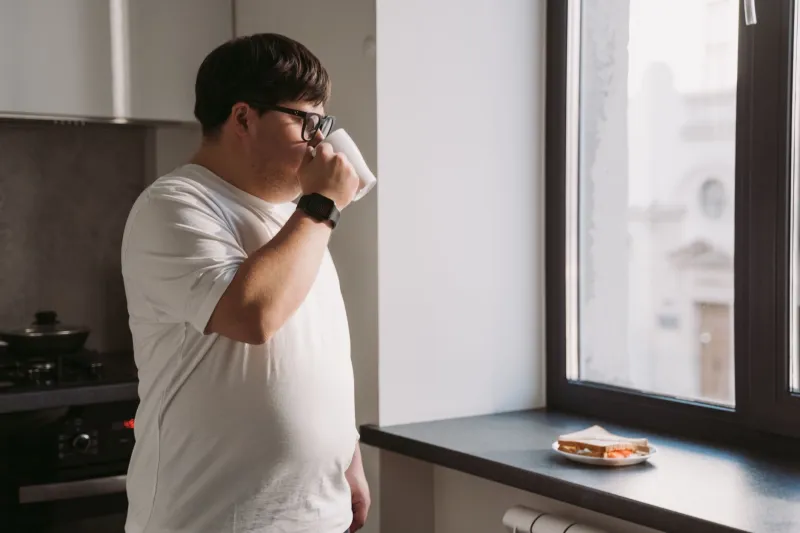
For most American men, the morning routine is non-negotiable: alarm, shower, coffee. It is one of the most deeply ingrained daily rituals in the country. According to the National Coffee Association, roughly 66 percent of Americans drink coffee every day — a figure that skews even higher among men over 40, the demographic most likely to be managing erectile dysfunction.
What very few of these men consider, however, is how their caffeine consumption interacts with tadalafil, the active ingredient in Cialis and one of the most widely prescribed ED medications in the United States. The relationship is not as straightforward as a simple warning label might suggest. It involves timing, individual biology, cardiovascular response, and subtle physiological mechanisms that most men never discuss with their physicians — largely because they do not think to bring it up.
This guide is designed to change that.
How Tadalafil Works — A Brief Primer
Tadalafil belongs to a class of medications called phosphodiesterase type 5 (PDE5) inhibitors. Its mechanism is rooted in vascular biology: it relaxes smooth muscle tissue in the walls of blood vessels, allowing increased blood flow to the penile tissue when sexual stimulation occurs. It does not create an erection on its own — it creates the physiological conditions that make a natural erection more achievable.
One of tadalafil's defining characteristics is its extended half-life. While sildenafil (Viagra) remains active for approximately four to six hours, tadalafil can remain therapeutically effective for up to 36 hours. This is why it has earned the nickname "the weekend pill" and why it is also prescribed in lower daily doses for men who prefer spontaneity over scheduled timing.
Because tadalafil exerts its effects through the vascular system, anything else that meaningfully affects blood pressure, heart rate, or circulation deserves careful consideration. Caffeine is precisely that kind of substance.
What Caffeine Actually Does to Your Cardiovascular System
Caffeine is a stimulant. More specifically, it is an adenosine receptor antagonist — it blocks the receptors in your brain and body that would otherwise signal fatigue and vasodilation. The result is a cascade of stimulatory effects: increased alertness, elevated heart rate, and a transient rise in blood pressure.
For a healthy individual consuming moderate amounts of caffeine, these effects are temporary and generally well-tolerated. However, for a man taking a vasodilatory medication like tadalafil, the interaction becomes more nuanced.
Tadalafil lowers blood pressure by dilating blood vessels. Caffeine raises blood pressure by stimulating the cardiovascular system. On the surface, this might seem like a wash — two opposing forces canceling each other out. In practice, the picture is considerably more complicated. The two substances act through entirely different mechanisms, and their combined effect on the cardiovascular system is not simply additive or subtractive. Individual responses vary significantly based on genetics, tolerance, body weight, kidney function, and baseline cardiovascular health.
The Timing Factor: When You Drink Your Coffee Matters
For men taking tadalafil on an as-needed basis — typically the 10 mg or 20 mg dose taken before anticipated sexual activity — timing is particularly relevant. Tadalafil reaches peak plasma concentration approximately two hours after ingestion. Consuming large quantities of caffeine in that same window can introduce cardiovascular variability at precisely the moment when stable blood flow is most important.
This does not mean one cup of coffee will undermine your medication. For most men, moderate caffeine intake — defined by the FDA as up to 400 milligrams per day, or roughly three to four standard cups of brewed coffee — does not appear to significantly impair tadalafil's effectiveness.
The concern arises with heavier consumption. Men who habitually drink five or more cups daily, or who consume caffeine through multiple sources (energy drinks, pre-workout supplements, certain teas, and sodas), may be introducing enough cardiovascular stimulation to create inconsistency in their treatment response. Some men report that on high-caffeine days, their erections feel less reliable — not dramatically absent, but subtly less robust.
Caffeine and Anxiety: The Overlooked Psychological Variable
Erectile function is not purely mechanical. Psychological state plays a significant and often underestimated role in sexual performance. Performance anxiety, stress, and mental distraction are among the most common contributors to ED that does not respond fully to medication alone.
High caffeine intake is a well-documented driver of anxiety, particularly in men who are genetically predisposed to slower caffeine metabolism. The CYP1A2 enzyme, which the liver uses to break down caffeine, varies considerably from person to person. Slow metabolizers may experience prolonged stimulatory and anxiogenic effects from a single cup of coffee — effects that can persist for six to eight hours.
For a man already managing performance-related anxiety, adding caffeine-induced restlessness to the equation can actively work against what tadalafil is trying to accomplish. The medication may be doing its job at the vascular level while psychological arousal interference blunts the overall experience.
Practical Adjustments Worth Considering
None of this is meant to suggest that men on tadalafil must give up coffee. That would be both unrealistic and, for most men, unnecessary. The goal is thoughtful calibration, not abstinence.
Here are several evidence-informed adjustments that may improve treatment consistency:
Moderate your intake on treatment days. If you take tadalafil on an as-needed basis, consider limiting caffeine to one or two cups on the day you take your dose. Save the third or fourth cup for days when you are not anticipating sexual activity.
Mind the timing window. Avoid consuming large amounts of caffeine within two hours of taking tadalafil. This is when the medication is reaching peak concentration and when cardiovascular stability is most beneficial.
Account for hidden caffeine sources. Many American men underestimate their total daily caffeine load. Pre-workout supplements, energy drinks, certain protein bars, and even some over-the-counter pain relievers contain significant amounts. A realistic accounting of total daily intake is more useful than simply counting coffee cups.
Monitor your individual response. Because caffeine metabolism is genetically variable, there is no universal threshold that applies to every man. Pay attention to whether high-caffeine days correlate with less satisfying treatment outcomes. If a pattern emerges, it is worth discussing with your prescribing physician.
Consider switching to daily-dose tadalafil. Men who take 2.5 mg or 5 mg of tadalafil daily may find that the steady-state pharmacokinetics of this regimen make them less sensitive to day-to-day caffeine variability. The medication's effects are more consistent and less dependent on precise timing.
The Conversation Most Men Skip
Physicians who prescribe tadalafil typically review major drug interactions, cardiovascular history, and current medications. What they rarely ask about — and what men rarely volunteer — is caffeine consumption.
This gap exists because caffeine is so normalized in American culture that neither party tends to frame it as a clinical variable. But for men who are not achieving the results they expected from tadalafil, lifestyle factors like caffeine intake are often the missing piece of the puzzle.
At CialiSun, our approach to ED care is built on the understanding that medication works best when it operates within a well-considered lifestyle context. Online consultations with licensed physicians are designed to surface exactly these kinds of nuanced questions — the ones that do not come up in a rushed in-office appointment but that can make a meaningful difference in your outcomes.
A Smarter Approach to an Everyday Habit
Your morning coffee is not the enemy. For most men, moderate caffeine consumption and tadalafil coexist without issue. But for men who are not experiencing the full benefit of their ED treatment, caffeine is one of the first lifestyle variables worth examining — and one of the easiest to adjust.
Small changes in timing, quantity, and awareness can translate into noticeably more consistent results. That is the kind of practical, personalized guidance that separates effective ED management from simply taking a pill and hoping for the best.