When the Boardroom Follows You to Bed: Understanding How Chronic Stress Undermines Erectile Function
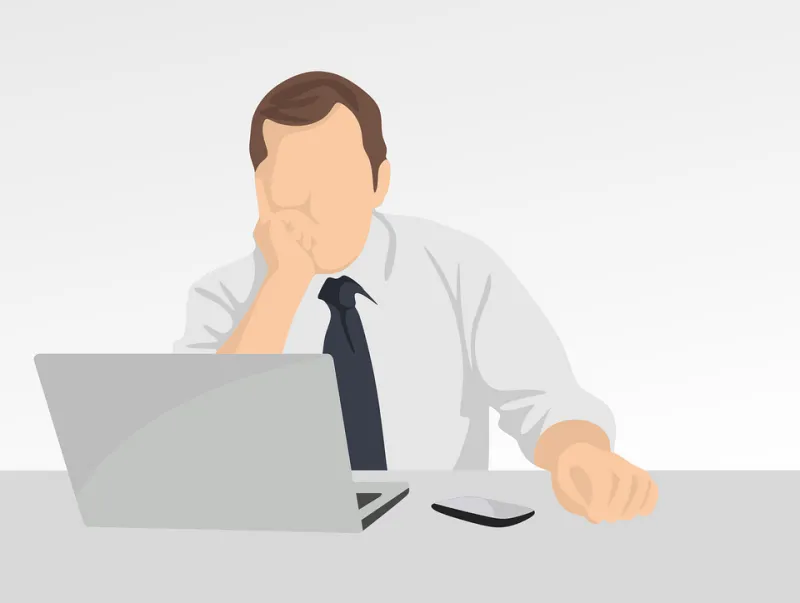
Photo: Ronny Overhate, CC0, via Wikimedia Commons
For many American men, the line between professional pressure and personal wellbeing has never been thinner. Deadlines, economic uncertainty, always-on communication, and the cultural expectation to perform without complaint have created a generation of men who are, by nearly every measurable standard, chronically stressed. What is less frequently discussed is what that sustained pressure is doing below the belt.
Erectile dysfunction is often framed as a plumbing problem—a mechanical failure of blood flow. That framing is incomplete. For a significant proportion of men, ED is as much a product of what is happening in the nervous system and the endocrine system as it is a vascular issue. Stress and anxiety sit at the center of that story.
The Cortisol Effect: How Your Stress Hormone Becomes a Sexual Disruptor
When the brain perceives a threat—whether that threat is a looming quarterly review or an unanswered email at midnight—it triggers the release of cortisol and adrenaline. These hormones are extraordinarily useful in genuine emergencies. They sharpen focus, accelerate the heart rate, and redirect blood flow toward the muscles and organs most needed for fight or flight.
The problem is that the modern American workplace presents a near-continuous stream of perceived threats. When cortisol levels remain elevated day after day, the body begins to treat the stress response as its default operating mode. One of the first casualties of that shift is testosterone. Research consistently demonstrates that chronically elevated cortisol suppresses testosterone production—and testosterone, while not the sole driver of erectile function, plays a meaningful role in sexual desire and arousal.
Beyond hormonal disruption, sustained stress keeps the sympathetic nervous system in a state of high alert. Erections, however, depend on the parasympathetic nervous system—the branch responsible for rest, digestion, and, critically, sexual arousal. When the sympathetic system dominates, the parasympathetic system is effectively sidelined. Blood vessels in the penis remain constricted rather than dilating to allow the inflow of blood that produces an erection. The body, in short, is too busy preparing for danger to permit intimacy.
Workplace Burnout and the American Man: A Quiet Crisis
The American Psychological Association has documented rising rates of workplace stress for over a decade, with men in their thirties through fifties—prime career years—reporting some of the highest levels of occupational pressure. Burnout, once considered a niche concern, is now recognized by the World Health Organization as an occupational phenomenon with measurable physiological consequences.
For men, burnout carries a particular cultural weight. Many have been conditioned to equate productivity with self-worth, making it genuinely difficult to acknowledge that stress is affecting their health—let alone their sexual health. The result is a compounding silence: stress causes ED, ED causes additional anxiety and shame, and that anxiety generates more stress. Researchers refer to this as a bidirectional relationship, and it is one of the reasons that addressing only one side of the equation so often falls short.
Performance Anxiety: The Layer That Makes Everything Worse
Once a man experiences difficulty achieving or maintaining an erection—regardless of the original cause—a new psychological layer frequently emerges: performance anxiety. The anticipation of failure becomes a self-fulfilling prophecy. The bedroom, once a place of connection, becomes a site of evaluation. Heart rate rises before intimacy begins, cortisol floods the system, and the parasympathetic nervous system retreats precisely when it is needed most.
This cycle can persist long after the original stressor has resolved. A demanding project ends, but the anxiety around sexual performance has taken on a life of its own. This is why interventions that address only the psychological dimension—or only the physiological one—frequently produce incomplete results.
Evidence-Based Strategies for Breaking the Cycle
The research on stress-related ED points toward a multi-pronged approach. No single intervention addresses every dimension of the problem, but several have demonstrated meaningful benefit.
Structured stress reduction practices. Mindfulness-based stress reduction (MBSR) has accumulated a substantial body of evidence supporting its effectiveness in lowering cortisol and improving parasympathetic tone. Even brief, consistent practice—fifteen to twenty minutes daily—has been shown to shift the nervous system's baseline toward a calmer state over time.
Aerobic exercise. Regular cardiovascular activity reduces circulating cortisol, supports healthy testosterone levels, improves endothelial function (the health of blood vessel linings), and has been shown in multiple studies to improve erectile function independently of other interventions. The American Heart Association's recommendation of 150 minutes of moderate-intensity exercise per week is a reasonable target.
Sleep prioritization. Testosterone production occurs predominantly during deep sleep. Men who consistently sleep fewer than six hours show measurably lower testosterone levels than those who sleep seven to nine hours. Addressing sleep hygiene is not a peripheral concern—it is a direct intervention in the hormonal environment that supports sexual function.
Cognitive behavioral therapy (CBT). For men whose ED has a strong performance-anxiety component, structured CBT with a licensed therapist or psychologist can interrupt the anticipatory anxiety cycle. Telehealth has made this form of support more accessible than at any prior point in history.
Where Tadalafil Fits in the Picture
Tadalafil, the active ingredient in Cialis, works by inhibiting the enzyme phosphodiesterase type 5 (PDE5), allowing smooth muscle in the penile blood vessels to relax and blood flow to increase in response to sexual stimulation. It does not generate arousal independently, but it meaningfully lowers the physiological threshold required to achieve an erection—which can be particularly valuable for men whose stress-elevated sympathetic tone is working against them.
For men navigating stress-related ED, tadalafil can serve an important secondary function beyond the immediate physical benefit: it can interrupt the performance-anxiety cycle by providing reliable, consistent support during the period when lifestyle interventions are taking hold. Restoring confidence during intimacy reduces anticipatory anxiety, which in turn reduces cortisol, which in turn makes the body more responsive. The medication, in this framing, is not a permanent crutch but a strategic tool that creates space for the broader work of stress management to succeed.
At CialiSun, our licensed medical providers conduct thorough consultations that consider the full context of a patient's health—including stress, mental health history, and lifestyle factors—before recommending a treatment approach. The goal is never simply to address the symptom in isolation.
A Final Word on Asking for Help
American men remain statistically less likely than women to seek medical care, and the stigma surrounding sexual health makes that reluctance even more pronounced when ED is involved. The irony is that the same cultural programming that discourages help-seeking—the pressure to appear invulnerable, to perform without complaint—is often the very source of the stress driving the problem.
Recognizing that chronic stress has physical consequences is not a sign of weakness. It is an act of honest self-assessment. And addressing those consequences through a combination of lifestyle change, professional support, and, where appropriate, evidence-based medication is among the most practical things a man can do for his health, his relationships, and his quality of life.