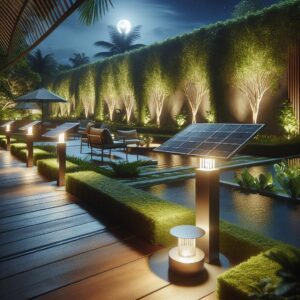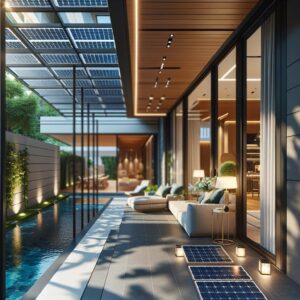
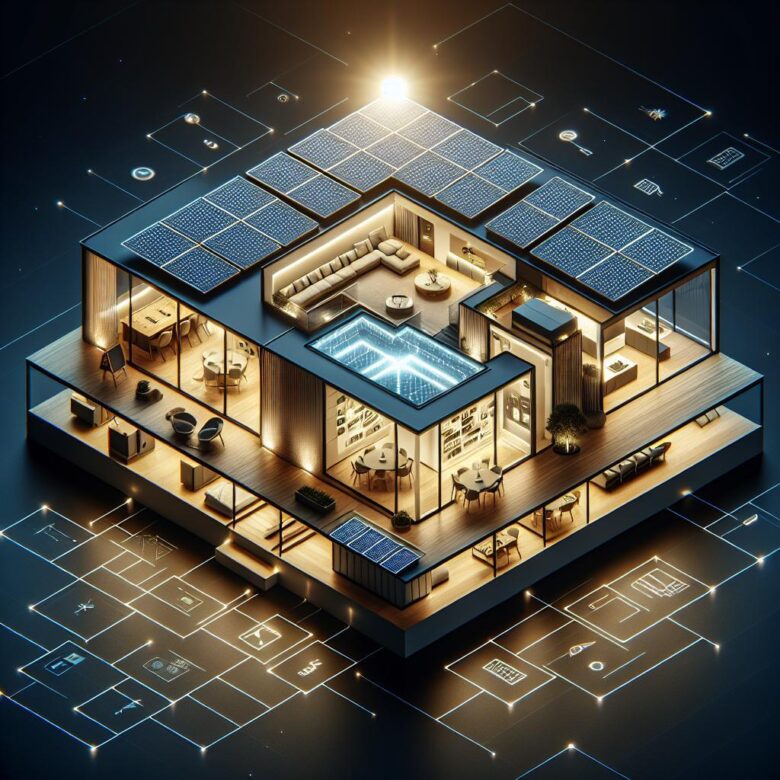
Most solar lighting plans fail at the design stage-not because the technology is weak, but because fixtures get treated as add-ons after the architecture is already locked. The result is poor placement, uneven ambience, visual clutter, and higher retrofit costs.
In my experience working on residential design strategy, the biggest mistake homeowners and architects make is separating energy goals from spatial intent. That gap can lead to wasted budget, compromised curb appeal, and lighting that underperforms when it matters most.
Below, I break down how to integrate solar lighting into your home design from the start-so you can improve efficiency, strengthen aesthetics, and create a lighting plan that feels intentional, not improvised.
Architectural Strategies for Integrating Solar Lighting: Site Planning, Roof Design, and Aesthetic Alignment
Most solar-lighting failures are decided before fixture selection: poor site orientation and roof geometry can cut daily charging yield by 20-40%, even with premium luminaires. Early-stage massing studies should map seasonal shade, tree growth, parapet height, and reflected light so solar path access is protected as deliberately as window daylighting.
| Design Layer | Architectural Strategy | Technical Priority |
|---|---|---|
| Site Planning | Zone pathways, entries, and landscape features by solar exposure; reserve high-insolation areas for autonomous fixtures and use wired hybrids in persistent shade. | Run shade and irradiance studies in Ladybug Tools or PVsyst before finalizing hardscape and planting layouts. |
| Roof Design | Coordinate slope, drainage, skylights, and mechanical screening to avoid panel self-shading and inaccessible maintenance zones. | Maintain clear solar access windows and service paths, especially on low-slope roofs with equipment clusters. |
| Aesthetic Alignment | Match fixture scale, color temperature, and mounting detail to the façade language so solar components read as integrated architecture rather than add-ons. | Use concealed fasteners, consistent metal finishes, and lumen levels calibrated to material reflectance. |
Field Note: On a coastal residence, we recovered an underperforming solar entry sequence simply by moving bollards 1.2 meters outside a late-phase pergola shadow line identified in a revised Ladybug Tools sun-hour model.
How to Choose Solar Lighting for Modern Home Design: Fixture Placement, Lumen Output, Battery Storage, and Material Performance
Most solar lighting failures in modern homes trace to poor fixture zoning, not bad products: path lights are routinely specified at 5-10 lumens where vertical façade wash needs 50-150 lumens, and undersized battery packs collapse after two cloudy days. Start with photometric intent first, then verify solar access and runtime using PV*SOL or AGi32 before locking fixture schedules.
| Design Factor | Technical Target | Specification Guidance |
|---|---|---|
| Fixture Placement | 6-8 ft path spacing; 20-30° beam control at entries; avoid tree-shadow zones after 2 p.m. | Place panels where winter sun exposure exceeds 4 peak-sun-hours; separate panel-and-head systems work better for deep overhangs and recessed courtyards. |
| Lumen Output + Battery Storage | Paths: 10-20 lm; steps: 12-30 lm; feature walls: 50-150 lm; gates/security edges: 200+ lm | Size batteries for 3 nights autonomy minimum; favor LiFePO4 over NiMH for thermal stability, cycle life, and better cold-weather discharge behavior. |
| Material Performance | IP65+ for exposed walls; marine-grade finishes in coastal air; UV-stabilized lenses | Use powder-coated aluminum or 316 stainless steel; avoid low-grade ABS housings on minimalist façades because chalking and lens haze show quickly. |
Field Note: On a flat-roofed modern residence with parapet shading, I corrected repeated dusk shutoffs by moving the panel 11 feet to the south terrace and increasing storage from 12Wh to 24Wh, which stabilized runtime through three overcast evenings without changing the fixture heads.
Designing High-Impact Solar Lighting Layers: Pathways, Facades, Landscapes, and Smart Controls for Efficient Architectural Homes
Most underperforming solar lighting schemes fail at the layering stage: path lights are over-spaced, facade accents ignore beam control, and batteries are sized for peak brightness instead of usable runtime. In architectural homes, the target is not “more fixtures” but calibrated light distribution, typically 1-5 lux for circulation, 5-20 lux for entry emphasis, and controlled contrast to preserve facade depth.
| Layer | Technical Priority | Design Guidance |
|---|---|---|
| Pathways | Uniformity and glare control | Use low-height bollards or shielded markers at staggered intervals; model spacing and spill in DIALux evo before fixing panel and battery capacity. |
| Facades | Beam precision and shadow hierarchy | Select narrow or elliptical optics for columns, textured walls, and recesses; avoid broad flood patterns that flatten material articulation and waste stored energy. |
| Landscapes + Smart Controls | Load management and adaptive dimming | Group trees, steps, and perimeter zones on separate control logic with motion-triggered boost and midnight dim-down to extend autonomy through low-irradiance days. |
Field Note: On a hillside residence, I cut battery failures by nearly half after separating facade uplights from pathway circuits and resetting occupancy-triggered output from 100% constant burn to a 30% standby / 80% event profile.
Q&A
1. When should solar lighting be planned in the home design process?
Solar lighting should be considered as early as the schematic or concept design phase. This allows the architect to position pathways, outdoor living areas, façades, and landscape features where they can receive adequate sunlight for panel charging. Early planning also helps coordinate fixture placement, conduit needs for hybrid systems, battery storage locations, and the visual integration of solar components into the architecture rather than treating them as an afterthought.
2. Will solar lighting provide reliable performance year-round?
It can, but reliability depends on product quality, local climate, panel orientation, battery capacity, and daily sunlight exposure. In architectural applications, high-quality solar fixtures with lithium-based batteries, efficient LEDs, and smart controls perform far better than low-cost consumer-grade units. For shaded sites or regions with long winters, many homeowners choose hybrid designs that combine solar charging with grid backup to maintain consistent illumination and meet both aesthetic and safety requirements.
3. How can solar lighting be integrated without compromising the home’s design aesthetic?
The key is to treat solar lighting as part of the architectural language of the home. Choose fixtures that match the project’s material palette, scale, and style, whether modern, minimalist, traditional, or transitional. Recessed solar path lights, discreet bollards, integrated step lights, and landscape fixtures with concealed panels often create a cleaner result than standalone decorative units. It is also important to coordinate color temperature, beam spread, and light layering so the solar lighting enhances texture, circulation, and focal points without appearing visually cluttered.
Closing Recommendations
Solar lighting delivers its best results when it is treated as part of the architecture, not an accessory added after construction documents are finished. The biggest mistake I still see is teams selecting fixtures before validating winter sun exposure, battery autonomy, and nighttime wayfinding performance on the actual site.
Pro Tip: If you only implement one thing from this guide, make it a full-site solar and shade study before final fixture selection. That single step prevents underpowered pathways, uneven facade lighting, and costly retrofits that can compromise both design intent and safety.
Before you close this tab, open your site plan and mark three priority zones for solar lighting: entry, path, and outdoor living area. Then compare each zone against sun access, mounting options, and maintenance reach.

Dr. Alistair Vance is a sustainable design consultant and renewable energy expert with a Ph.D. in Environmental Architecture. With over a decade of experience in solar integration, he specializes in blending cutting-edge photovoltaic technology with modern home aesthetics. Dr. Vance is dedicated to helping homeowners transform their outdoor spaces into eco-friendly sanctuaries through smart, solar-powered lighting solutions.